Yesterday I finished my long run for the week. It was 11 miles. This is not an overly challenging distance for me. I was running 11 mile long runs prior to even starting official marathon training. In some ways, it makes me feel like I'm stuck in limbo; like I'm not actually progressing towards my goal of finishing a 26.2 mile race. And then I think of where I was a year ago.
One year ago, I had experienced the first twinging in my knee. One year ago, I was running distances of 10 miles multiple days in a row. One year ago, I finished a long run of 18.7 miles on a knee that started hurting 4 miles in. One year ago, I set myself to be hurt to the point that my knee needed surgery and I wouldn't be able to run at all for many months.
A few weeks ago, I started getting nervous about the emphasis that my training schedule was placing on long runs. As a rule of thumb, most coaches would advise that the long run consists of 40% or less of your total weekly mileage. Mine was pushing 50%. So I switched to a plan that was heavy on mid-week distances and quality runs, and more conservative on the long-run distances.
I honestly don't know how it will pan out in the end, but I can tell you that although my knee is still a little twingey, it feels strong. I've made it a little bit closer to my marathon date without an injury. Maybe there's a lesson to be learned in all of this. Instead of relying on my efforts alone to get me to my goal, I have to have faith in the plan and the preparations.
Regardless of my performance on October 30th or the outcome of the race, I'm looking forward to at least getting to the starting line. That's a heck of a lot farther than I made it last year!
Showing posts with label injury. Show all posts
Showing posts with label injury. Show all posts
Monday, August 29, 2011

Friday, January 28, 2011
Graduation Day
Yesterday was my last day of physical therapy. While I'm going to miss Wanda, I am excited that I've progressed enough to be completely personally responsible for my recovery from this point forward. This is where my motivation and drive will really be tested. Do I want my recovery badly enough to put in the hard work without any external forces pushing me? Right now, I do. But sometimes the larger goal gets lost in the monotony of the daily tedium, so it's going to take some will power.
However, it's been really exciting to see the progress I've made, and I think being able to experience the tangible results of my hard work will provide an awful lot of incentive. When I first started therapy after my surgery, I could only partially bend my knee, I experienced pain walking up and down stairs, and I couldn't stand for more than a few minutes at a time. Today I walked down a flight of stairs with no pain and I walked on a treadmill for 2 miles. And yesterday I actually ran! It was only for 30 seconds on the treadmill, and that was long enough for me to feel some pain in my knee and realize I wasn't ready yet, but still, I ran!
I'm definitely not in the clear yet. Even though I'm done with PT, I'm in no way close to being healed. This is just one benchmark along the road to recovery. There's still a possibility (and a pretty good likelihood if I'm honest with myself) that I'll experience setbacks and pain and frustration. But that's kind of the point of a benchmark, right? Despite those setbacks, I have a mark in place that lets me know I've progressed.
I'm looking forward to continuing my progression and establishing new benchmarks. For right now, though, it's just nice to be on the treadmill again.
However, it's been really exciting to see the progress I've made, and I think being able to experience the tangible results of my hard work will provide an awful lot of incentive. When I first started therapy after my surgery, I could only partially bend my knee, I experienced pain walking up and down stairs, and I couldn't stand for more than a few minutes at a time. Today I walked down a flight of stairs with no pain and I walked on a treadmill for 2 miles. And yesterday I actually ran! It was only for 30 seconds on the treadmill, and that was long enough for me to feel some pain in my knee and realize I wasn't ready yet, but still, I ran!
I'm definitely not in the clear yet. Even though I'm done with PT, I'm in no way close to being healed. This is just one benchmark along the road to recovery. There's still a possibility (and a pretty good likelihood if I'm honest with myself) that I'll experience setbacks and pain and frustration. But that's kind of the point of a benchmark, right? Despite those setbacks, I have a mark in place that lets me know I've progressed.
I'm looking forward to continuing my progression and establishing new benchmarks. For right now, though, it's just nice to be on the treadmill again.
Saturday, January 22, 2011
Balancing Act
Balance. It's something we learn as tiny babies. First we learn to sit up without falling over. Then we learn to stand. Then walking. We learn to jump, to stand on one foot, to hop, skip, lean forward or side to side, and we learn to run. All of these activities require balance. It should be something that is second nature to each of us.
Eventually, we learn to understand that balance is integral to stability. And not just in a physical sense. We have to learn to balance work and play, extracurricular activities, time with ourselves and time with others. We have to learn to balance priorities.
I learned an important lesson last week in physical therapy - my balance was off. I had no idea. I was doing what seemed like a simple exercise when Wanda pointed out that I was leaning back - I thought I was leaning forward. Then my very generous friend Mark agreed to help me get started lifting weights at the Y. He realized my left shoulder was several inches higher than my right; when he corrected me, I felt like I was literally leaning to the left.
This was an important realization. Think about it - if my balance is off just standing up which puts extra strain on certain areas, think about the strain that I was putting on my body when I was running 30 and 40 miles per week. When runners start putting in long runs of 15 miles or so, it's pretty typical for fatigue to set in and for their form to collapse. This happens when the core weakens. Well, I was never actually using my core to effectively support myself, which means for the entire distance of my runs, I was overly reliant on the wrong muscles.
So now an integral part of my therapy is focused on improving the strength of my core muscles. Some of the exercises I like, some of them I don't, but before I can run again, I need to learn to sit, stand, and walk correctly. I need to relearn how to balance correctly - a lesson I learned for the first time about 30 years ago. That's a lot of retraining!
This got me thinking about other areas of my life, though. Are my priorities in balance? How about the way I spend my time? What I think about? Where I place my trust? My emotional stability?
I'm learning to rebalance physically, but I don't want to waste the momentum I have right now to miss the opportunity to rebalance emotionally, spiritually, and mentally as well. I'm pretty open about my struggles, but I'm not always good about taking the necessary steps to work through my weaknesses. I know that I struggle with staying motivated to eat well, but I continue to focus my efforts on "powering through it" instead of addressing the underlying reasons why. Maybe it's because my balance is off and I'm relying on the wrong spiritual and emotional muscles. As I learned, I can get away with being off balance in the short-term, but it leads to major complications in the long-term.
Physically, I need to focus on strengthening my core. I need to strengthen my spiritual core, too.
Eventually, we learn to understand that balance is integral to stability. And not just in a physical sense. We have to learn to balance work and play, extracurricular activities, time with ourselves and time with others. We have to learn to balance priorities.
I learned an important lesson last week in physical therapy - my balance was off. I had no idea. I was doing what seemed like a simple exercise when Wanda pointed out that I was leaning back - I thought I was leaning forward. Then my very generous friend Mark agreed to help me get started lifting weights at the Y. He realized my left shoulder was several inches higher than my right; when he corrected me, I felt like I was literally leaning to the left.
This was an important realization. Think about it - if my balance is off just standing up which puts extra strain on certain areas, think about the strain that I was putting on my body when I was running 30 and 40 miles per week. When runners start putting in long runs of 15 miles or so, it's pretty typical for fatigue to set in and for their form to collapse. This happens when the core weakens. Well, I was never actually using my core to effectively support myself, which means for the entire distance of my runs, I was overly reliant on the wrong muscles.
So now an integral part of my therapy is focused on improving the strength of my core muscles. Some of the exercises I like, some of them I don't, but before I can run again, I need to learn to sit, stand, and walk correctly. I need to relearn how to balance correctly - a lesson I learned for the first time about 30 years ago. That's a lot of retraining!
This got me thinking about other areas of my life, though. Are my priorities in balance? How about the way I spend my time? What I think about? Where I place my trust? My emotional stability?
I'm learning to rebalance physically, but I don't want to waste the momentum I have right now to miss the opportunity to rebalance emotionally, spiritually, and mentally as well. I'm pretty open about my struggles, but I'm not always good about taking the necessary steps to work through my weaknesses. I know that I struggle with staying motivated to eat well, but I continue to focus my efforts on "powering through it" instead of addressing the underlying reasons why. Maybe it's because my balance is off and I'm relying on the wrong spiritual and emotional muscles. As I learned, I can get away with being off balance in the short-term, but it leads to major complications in the long-term.
Physically, I need to focus on strengthening my core. I need to strengthen my spiritual core, too.
Friday, January 14, 2011
Decision Time!
I got an email two days ago that makes me very excited and apprehensive at the same time. The email was from the Marine Corps Marathon and it was my deferment letter. Since I got hurt last year and couldn't run, I had the option to defer my registration until the next year. Well, the next year's now here!
My PT is going very well, but I still haven't run since September of last year, and I don't know how long it's going to be before I can start running again. Is it possible that I can go from 0 to 26.2 in ten months? What about nine months? Eight? And perhaps the more important question: Is it safe for me to attempt this again so soon after my surgery?
My goal is definitely to avoid making the same mistakes this time around. When I start running again, I want to be smart and healthy about it. I'm already working towards that goal with the work I'm doing in PT. I know a marathon is in my future, but is it in my future for 2011?
I sure hope so. On January 19, I'm registering for the 2011 Marine Corps Marathon.
My PT is going very well, but I still haven't run since September of last year, and I don't know how long it's going to be before I can start running again. Is it possible that I can go from 0 to 26.2 in ten months? What about nine months? Eight? And perhaps the more important question: Is it safe for me to attempt this again so soon after my surgery?
My goal is definitely to avoid making the same mistakes this time around. When I start running again, I want to be smart and healthy about it. I'm already working towards that goal with the work I'm doing in PT. I know a marathon is in my future, but is it in my future for 2011?
I sure hope so. On January 19, I'm registering for the 2011 Marine Corps Marathon.
Wednesday, January 12, 2011
Why me?
It's a simple question, but it gets asked often, usually when we're faced with some sort of challenge or difficult situation that we don't want to deal with. We wonder, "Why did this happen to me?" When I hear someone use this phrase, there's usually an implication that it should have happened to someone else.
Well, I don't generally think that way. When I ask "Why me?" it's usually to examine my own behavior, motives, or actions to determine what I may have done that resulted in the less than ideal outcome. Getting injured led to a lot of these questions.
I hope my friends all know that my faith is very important to me. I strive and struggle to be a woman of God, but like everyone else in this world, I am a flawed being and often fall short. Whenever adversity strikes, my tendency is to go back and examine my life to determine whether it was actually caused by something I did. Did I get injured because I was spending too much of my time focusing on running and not using that time to spend with God? Was I taking too much credit for my meager accomplishments instead of turning that towards God? Was I taking time away from something else God wanted me to be doing instead? Was God using this to get my attention?
Honestly, I don't know the answers to those questions. But I also don't think those are the right questions to ask. My injury definitely was caused by something I did, at least in a physical sense. But the more important question to ask is "What am I going to do about it now?"
I'm a big fan of J.R.R. Tolkien. My favorite quote from the Lord of the Rings is when Frodo is talking to Gandalf. Frodo has taken possession of the ring of power and is realizing that he has a very difficult task before him. Frodo tells Gandolf that he wishes the ring had never come to him. Gandalf responds by saying, "So do all who live to face such times, but that is not for them to decide. All we have to decide is what to do with the time that is given to us."
So what am I going to do about the time that has been given to me? I'm going to learn and grow from it. I'm going to be stronger, smarter, healthier, and more well-rounded. I'm going to trust God to heal my body, and turn that glory back to Him. I'm going to thank God every time I'm able to take a step without pain, everytime I feel my legs shaking after a grueling physical therapy session, every time I even consider hitting the snooze button instead of getting up for my morning work out. I'm going to thank God for the ability to use my body again.
I'm going to give up on the "why me" and focus on the "what now."
Well, I don't generally think that way. When I ask "Why me?" it's usually to examine my own behavior, motives, or actions to determine what I may have done that resulted in the less than ideal outcome. Getting injured led to a lot of these questions.
I hope my friends all know that my faith is very important to me. I strive and struggle to be a woman of God, but like everyone else in this world, I am a flawed being and often fall short. Whenever adversity strikes, my tendency is to go back and examine my life to determine whether it was actually caused by something I did. Did I get injured because I was spending too much of my time focusing on running and not using that time to spend with God? Was I taking too much credit for my meager accomplishments instead of turning that towards God? Was I taking time away from something else God wanted me to be doing instead? Was God using this to get my attention?
Honestly, I don't know the answers to those questions. But I also don't think those are the right questions to ask. My injury definitely was caused by something I did, at least in a physical sense. But the more important question to ask is "What am I going to do about it now?"
I'm a big fan of J.R.R. Tolkien. My favorite quote from the Lord of the Rings is when Frodo is talking to Gandalf. Frodo has taken possession of the ring of power and is realizing that he has a very difficult task before him. Frodo tells Gandolf that he wishes the ring had never come to him. Gandalf responds by saying, "So do all who live to face such times, but that is not for them to decide. All we have to decide is what to do with the time that is given to us."
So what am I going to do about the time that has been given to me? I'm going to learn and grow from it. I'm going to be stronger, smarter, healthier, and more well-rounded. I'm going to trust God to heal my body, and turn that glory back to Him. I'm going to thank God every time I'm able to take a step without pain, everytime I feel my legs shaking after a grueling physical therapy session, every time I even consider hitting the snooze button instead of getting up for my morning work out. I'm going to thank God for the ability to use my body again.
I'm going to give up on the "why me" and focus on the "what now."
Monday, January 10, 2011
What I didn't know about running (and other tips to be smarter than I was)
Before I share my very limited wisdom about running, let me start off this blog entry by saying that I was down a pound at my weekly morning weigh-in. Yay! I did really well sticking to my eating plan during the week, but I tend to struggle a lot on the weekends. This weekend was no exception. So I'm glad that despite a couple of less than perfect days, I still managed to see some results from my careful eating throughout the week.
Okay, now for the good stuff...
Any runner is used to hearing comments about how hard running is on your body or how "bad" running is for you. In some senses, it's true. Yes, running is hard on your joints and can lead to serious issues. Believe me, I'm well aware of this. But running is also a really, really good cardiovascular activity. I have never done anything else that burns nearly as many calories as running. It's easy, you don't need a lot of equipment, it's accessible, relatively inexpensive, and to be honest, many people out there genuinely enjoy it. Besides, if the choice is between running and not doing anything, do you really think not doing anything is healthier?
Now, there are ways to be smart about it, many of which I did not pay any attention to, which is at least partially why I ended up injured and needing surgery. So please, please learn from my mistakes!
Okay, now for the good stuff...
Any runner is used to hearing comments about how hard running is on your body or how "bad" running is for you. In some senses, it's true. Yes, running is hard on your joints and can lead to serious issues. Believe me, I'm well aware of this. But running is also a really, really good cardiovascular activity. I have never done anything else that burns nearly as many calories as running. It's easy, you don't need a lot of equipment, it's accessible, relatively inexpensive, and to be honest, many people out there genuinely enjoy it. Besides, if the choice is between running and not doing anything, do you really think not doing anything is healthier?
Now, there are ways to be smart about it, many of which I did not pay any attention to, which is at least partially why I ended up injured and needing surgery. So please, please learn from my mistakes!
- Good running shoes really do make a big difference. The shoes that they sell at Kohl's for $40 probably aren't going to provide enough support and cushioning to keep you healthy. Replace your shoes every 350 - 500 miles.
- Endurance comes before speed. If you're just starting out, don't worry about speed at first. Build up some of your endurance and some mileage - speed comes later.
- Stretching is important. Do it. You don't have to stretch right before you run, in fact stretching after you run is usually better because your muscles are warm, but make time to stretch.
- Take rest days. When you first start running, only go three or four times a week and take rest days in between. This gives your body a chance to recover from the new strains and stresses.
- Core strengthening - do it! Okay, I admit that I heard this advice, listened to how important it was, and still ignored it. One of the major reasons I had so many problems is that my core and support muscles were weak and I overcompensated with other muscles which led to the strain on my IT band (that's my very technical explanation). Core strengthening does not just mean abs and lower back! It also means hips and glutes. And spend time strengthening the hamstrings and quads, while you're at it. Bridges and wall squats are really good for this. If you don't know how to do these, call around to running stores, gyms, or orthopeodic centers until you find someone that can show you how to do them correctly. It's worth it! Yoga and pilates are also good options.
- Ramp up your mileage slowly. They say you should only increase your mileage by about 10% a week. So if I run four 3-mile runs one week for a total of 12 miles, the most I should add for the next week is an additional 1.2 miles.
- Listen to your body. If something hurts, stop running. Ice, rest and elevation are the best things you can do. Ice more often than you think you need to. Muscle soreness and minor pains are normal, but if something isn't normal, don't try to fool yourself that it is. Give yourself several days more than you think to recover. Then try again. If something isn't right, rest, ice, and elevate again. If it's still not right, see a doctor.
Okay, so none of those are mind-blowing, I know. Just another reiteration out there about things you've probably all heard. I also want to be very clear that I don't know anyone that was otherwise healthy that ran into serious issues only running a few miles a few times a week at a comfortable pace. Everyone I know that ended up with problems were training for long distances or really working to get faster. If you're not completely nuts like I was, you don't have nearly as much to worry about.
Despite the issues I've had, assuming my body recovers to the point that it's feasible, I will run again. This time I have a lot more knowledge to build from, which will hopefully prevent any serious injuries in the future. I love running, though, and despite the risks, it's the one form of exercise that I actually look forward to.
Thursday, January 6, 2011
It all started when...
Most of my close friends know that I've gone through a major transformation in the last year and a half. I've struggled for most of my adult life with weight management. In the summer of 2009, I started Weight Watchers and also started running again (I picked up running off and on since I was in college). Over the course of about six months, I had lost 65 or so pounds and to my surprise, was actually sticking to a regular running regimen for a period of more than just a couple of months. I felt amazing, and I was enjoying the benefits of having a strong, healthy body for the first time since high school.
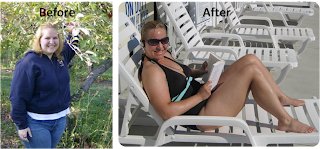
When I began running in 2009, my initial goal was to build up my stamina to run the Virginia 10-Miler in September of 2010. It seemed like a lofty goal when I could barely run half a mile without getting winded. I was surprised at how quickly my body was able to build up stamina, though, and I ended up running a 10-Miler in April of 2010. With that goal behind me, and with the entire summer to train, I set my sights on a much loftier goal: a marathon in October 2010.
 I did my research, downloaded my training schedule, and stuck it to the refrigerator. I was doing great - sticking to my workouts, getting my long-runs in, focusing on my nutrition. For three months, I adhered to my schedule, building my long runs up to 18 miles, and I realized that I was going to be able to run 26.2 miles in another two months. I felt amazing!
Well, I mostly felt amazing. My right knee was the exception. I started noticing the pain when I was running down a big hill one day on a 10-mile run. Not a big deal - aches and pains are normal when you're putting that kind of strain on your body. I came home, took a few advil, and took it easy for the rest of the day.
The next day I went running again, and got the same pain in my knee. I cut my run short and came home and took some advil. I took it easy for a few days, thinking I would be fine after some rest. I didn't want to miss any long-runs, though, so at the end of the week, I laced up my shoes, grabbed my water bottle, and headed out the door for a 19-mile run. Eight miles in, the pain came back, but I kept going. That was the last time I was able to run.
After that, I tried again a few times, but the pain came back after about a mile and I would have to stop and go home. I knew it was a problem with my IT band, so I made an appointment with the orthopeodic center and they confirmed my fears. The marathon was out and running was on hold.
I worked with an amazing physical therapist for a month. Although I was following the program she created for me, I wasn't experiencing the relief I was looking for. After that, the doctor tried a cortizone shot - it worked for a couple of weeks, then all of a sudden, the pain increased. I couldn't walk down stairs, walk around the block, or even swim without pain in my knee.
I ended up stopping all forms of exercise - everything hurt! It was incredibly frustrating and I could feel myself slipping into a mild depression. I'm very goal-oriented, and I felt a little lost without a specific goal to be working towards. I also felt myself slipping back into my old eating habits. I struggled to keep off the weight I lost, but I still started putting a few pounds back on. I was terrified that without my ability to run and exercise, I would regain all the weight I had worked so hard to lose.
I went back to the doctor and he told me the one thing I didn't want to hear: my injury was going to require surgery. As much as I was looking forward to experiencing relief from the pain, I was also very nervous. Surgery was my last hope - if this didn't work, I was out of options.
With a lump in my stomach and barely holding back tears, I walked to the scheduling center and set the date.
 I did my research, downloaded my training schedule, and stuck it to the refrigerator. I was doing great - sticking to my workouts, getting my long-runs in, focusing on my nutrition. For three months, I adhered to my schedule, building my long runs up to 18 miles, and I realized that I was going to be able to run 26.2 miles in another two months. I felt amazing!
Well, I mostly felt amazing. My right knee was the exception. I started noticing the pain when I was running down a big hill one day on a 10-mile run. Not a big deal - aches and pains are normal when you're putting that kind of strain on your body. I came home, took a few advil, and took it easy for the rest of the day.
The next day I went running again, and got the same pain in my knee. I cut my run short and came home and took some advil. I took it easy for a few days, thinking I would be fine after some rest. I didn't want to miss any long-runs, though, so at the end of the week, I laced up my shoes, grabbed my water bottle, and headed out the door for a 19-mile run. Eight miles in, the pain came back, but I kept going. That was the last time I was able to run.
After that, I tried again a few times, but the pain came back after about a mile and I would have to stop and go home. I knew it was a problem with my IT band, so I made an appointment with the orthopeodic center and they confirmed my fears. The marathon was out and running was on hold.
I worked with an amazing physical therapist for a month. Although I was following the program she created for me, I wasn't experiencing the relief I was looking for. After that, the doctor tried a cortizone shot - it worked for a couple of weeks, then all of a sudden, the pain increased. I couldn't walk down stairs, walk around the block, or even swim without pain in my knee.
I ended up stopping all forms of exercise - everything hurt! It was incredibly frustrating and I could feel myself slipping into a mild depression. I'm very goal-oriented, and I felt a little lost without a specific goal to be working towards. I also felt myself slipping back into my old eating habits. I struggled to keep off the weight I lost, but I still started putting a few pounds back on. I was terrified that without my ability to run and exercise, I would regain all the weight I had worked so hard to lose.
I went back to the doctor and he told me the one thing I didn't want to hear: my injury was going to require surgery. As much as I was looking forward to experiencing relief from the pain, I was also very nervous. Surgery was my last hope - if this didn't work, I was out of options.
With a lump in my stomach and barely holding back tears, I walked to the scheduling center and set the date.
Subscribe to:
Posts (Atom)